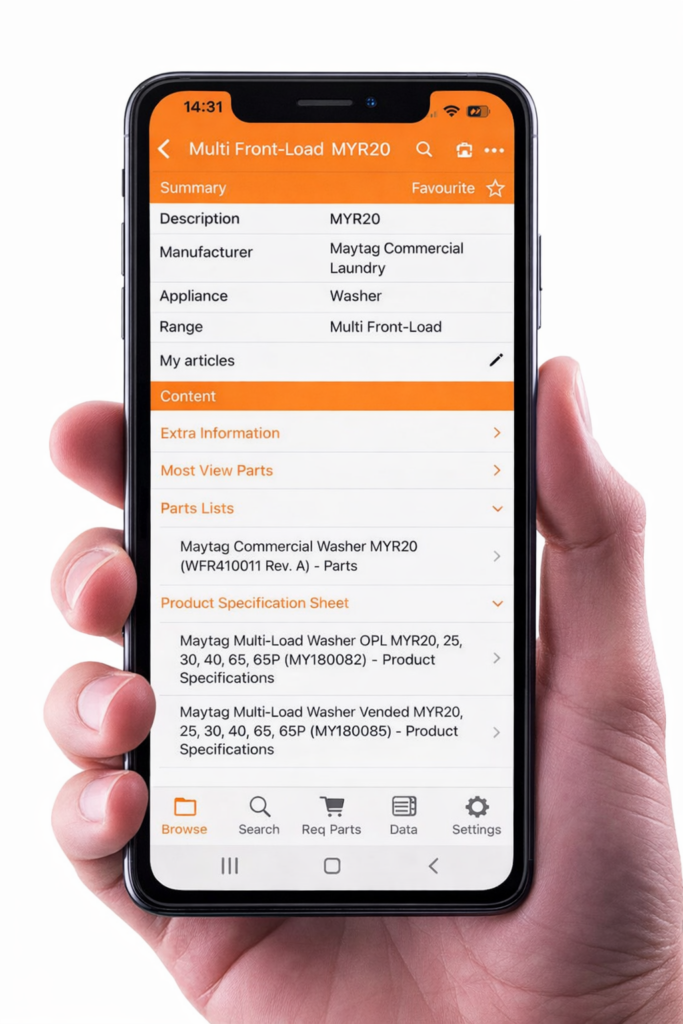

The Challenges of Using SharePoint for Field Service Documentation
Many organisations rely on SharePoint as a central repository for technical documentation. While it works well for general document management, field service environments introduce a different set of operational demands.
For service-led organisations, the ability for engineers to quickly access accurate technical information has a direct impact on service performance, operational cost, and customer experience.
Several structural challenges often emerge when SharePoint is used as the primary platform for field service documentation.
Connectivity constraints in the field
Many documentation platforms assume consistent network connectivity. In reality, field engineers frequently operate in environments where connectivity is unreliable or limited.
Examples include:
- industrial facilities
- plant rooms and basements
- remote infrastructure sites
- construction/mining environments
- Restricted access areas – i.e military bases
If documentation systems rely heavily on continuous connectivity, access to critical information may be delayed or unavailable at the point of service. AnswersAnywhere works offline for constant access to all data in every environment.
Information retrieval in time-critical environments
Field engineers rarely search for documentation in an office setting. They need access to specific information while diagnosing or repairing equipment in front of a customer.
In practice, this often means searching for:
- a specific product model
- a serial number or configuration
- a fault code procedure
- a wiring diagram or parts reference
When documentation is stored as a large collection of files, search results can return multiple similar documents, increasing the time required to identify the correct information.
Even small delays at this stage can affect repair times, engineer productivity, and service responsiveness.
More than 80% of service technicians spend between 30 minutes and two hours each day locating technical and parts data.
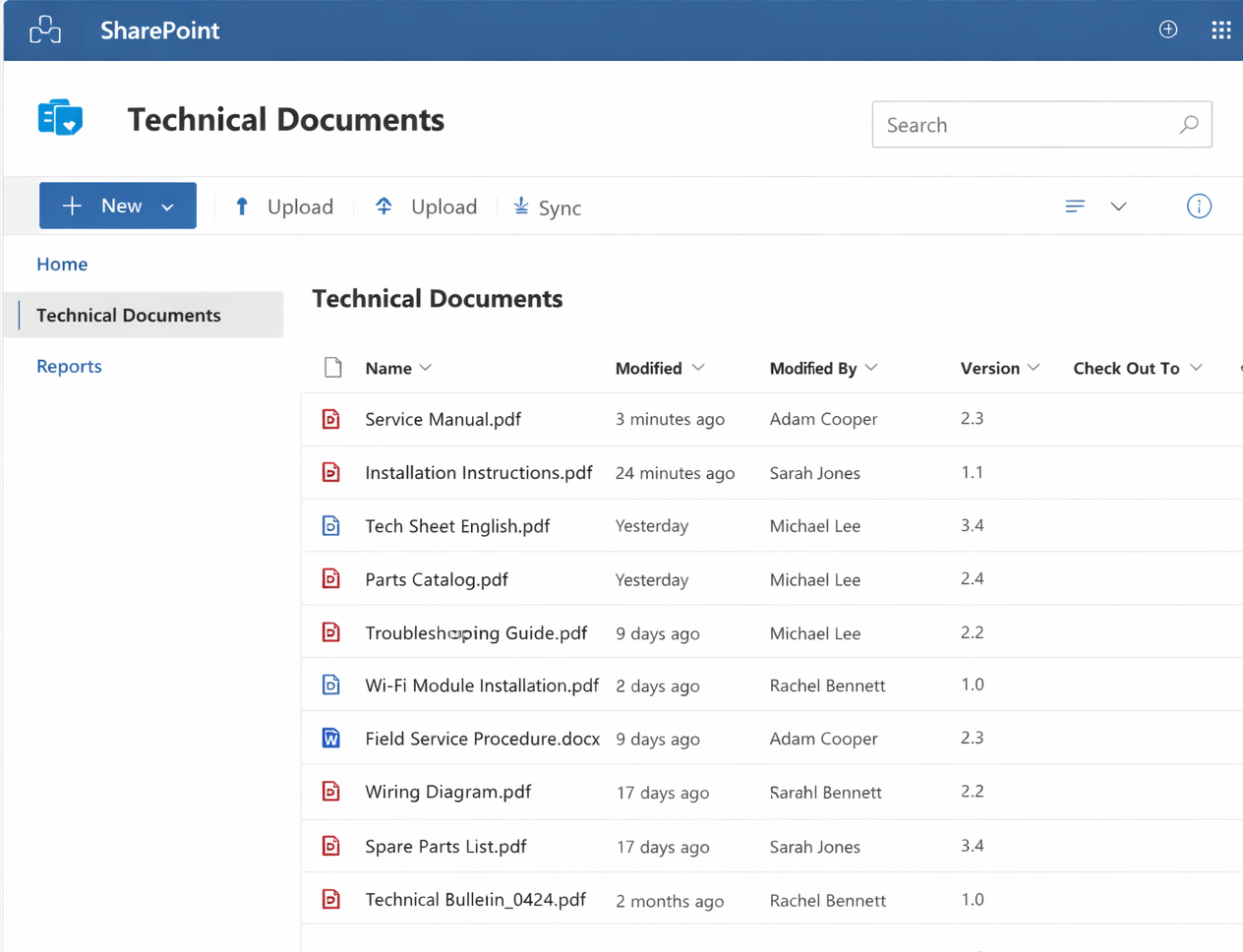
Documentation structures rarely reflect service operations
Technical documentation is typically organised within SharePoint using folder hierarchies or document libraries. However, field service work is rarely structured in the same way.
Engineers think in terms of assets, faults, components, and procedures, not file structures.
As product portfolios grow and documentation expands across multiple product versions, configurations, and service updates, traditional folder structures can become increasingly complex and difficult to navigate.
This can lead to duplicated documentation, inconsistent filing, and reduced usability for engineers in the field.
Version control and procedural accuracy
Service procedures, technical bulletins, and diagnostic guidance evolve continuously as products mature and issues are identified in the field.
Without strong document governance and clear publishing controls, organisations can face challenges ensuring engineers are working from the latest approved procedures.
In field service operations, outdated or unclear documentation does not simply create inefficiency — it can lead to:
- extended repair times
- repeat service visits
- unnecessary parts replacement
- potential compliance or safety risks
According to IDC, 27% of technicians say their documentation is incomplete, and 80% say that the needed content is hard to find.
Fragmented technical knowledge
A single service intervention often requires multiple sources of information, including service manuals, diagnostic procedures, wiring diagrams, parts lists product updates, or service bulletins.
When these materials are stored as separate documents without clear relationships between them, engineers must navigate across multiple files to build a complete understanding of the issue.
This fragmentation increases cognitive load and slows decision-making during fault diagnosis.
Now is the time to turn equipment information into a controllable margin lever
For many organisations, technical knowledge sits in systems that were never designed for the realities of field service. The result is not just inefficiency — it is a lack of control over a critical driver of service cost and performance.
The opportunity is to treat technical knowledge differently: not as stored documentation, but as an operational asset that is structured, connected, and delivered in line with how service is actually performed.
Importantly, this does not require complete transformation. In many cases, relatively small, targeted changes in how information is organised and accessed can fundamentally change how a job is completed — reducing time on site, improving accuracy, and enabling engineers to resolve issues more efficiently.
At Infomill, we work with organisations to define the most effective approach to storing and structuring their technical data so it can be accessed instantly at the point of service — regardless of environment or connectivity.
By doing so, organisations move from reacting to inefficiencies to actively controlling them — improving service consistency, reducing avoidable cost, and strengthening margin across the entire service operation.
In many cases, the risk of doing nothing is greater than the risk of change.