Your Data Will Make Or Break Your AI Strategy – Fact.
AI is everywhere right now. Every software company claims to be using it. Every app promises to be “AI-powered”. And every industry is trying to work out how this technology will genuinely improve the way people work.
But there’s one thing often missing from the conversation:
AI is only as good as the data behind it.
And this is where things become really interesting, because the business model really begins to shift.
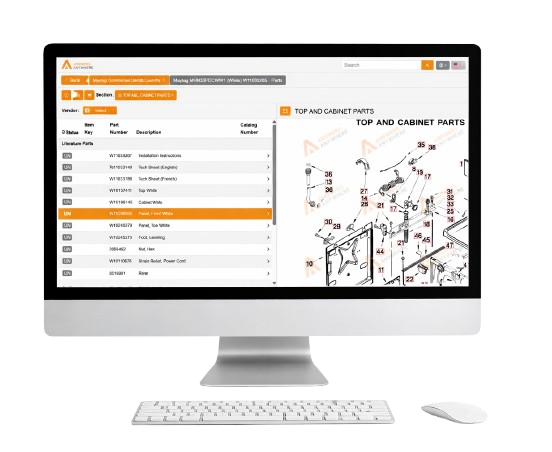
At Infomill, we’ve spent the last 30 years building PartsArena — our software platform for the UK heating industry. On the surface, it helps heating engineers quickly identify parts, access technical information and get to answers faster. Simple enough.
But behind the scenes sits something much bigger: one of the largest and most reliable heating equipment databases in the UK.
We’re talking data built from decades of manufacturer relationships with brands like Worcester Bosch, Vaillant, Ideal, Baxi and more than 130 others. Millions of structured data points. Equipment records. Technical documents. Parts relationships. Service information. Version histories. Compatibility data. And now, suddenly, everybody wants it.

Building A House On Sand
As AI tools become more sophisticated, developers are running into the same problem across almost every industry:
The models are clever. The data often isn’t.
You can build the smartest AI application in the world, but if the information feeding it is incomplete, outdated or unstructured, the results quickly fall apart. That’s why structured industry data is rapidly becoming one of the most valuable assets a business can own.
In our case, third-party AI developers and technology companies are increasingly recognising the value of PartsArena’s data — because it represents something incredibly difficult to create:
Trusted, structured, real-world equipment intelligence.
Not scraped internet content. Not generic manuals. Not disconnected spreadsheets buried in folders. Properly organised, verified data built over decades.
And this challenge isn’t unique to heating.
Our technical information is all over the place. We have the information — it’s just not easily accessible.”
Every Service Industry Has the Same Problem
Whether it’s HVAC, catering equipment, medical devices, EV charging, white goods, agriculture or industrial machinery — service organisations everywhere rely on accurate equipment information to operate efficiently.
Yet many businesses still wrestle with:
- Fragmented data spread across systems and departments
- Outdated technical documents
- Poorly structured inventory records
- Inconsistent manufacturer information
- Knowledge trapped inside people’s heads
That creates problems far beyond servicing. The impact is realised across AI development, predictive maintenance, stock forecasting, knowledge management, customer support, field service efficiency, including first time fix-rates.
And increasingly, businesses are realising that solving these problems starts with getting control of their data foundations first. Because AI doesn’t magically organise chaos. It amplifies whatever you feed it.
“Our engineers still have to contact manufacturers directly if they need technical or parts information. Some of it lives in SharePoint, some sits with manufacturers, some’s in PDFs on shared drives. It just makes life harder for everyone”
The Hidden Value Sitting Inside Equipment Data
For years, service and equipment data was often viewed as purely operational — useful for engineers and support teams, but not necessarily strategic.
That mindset is changing fast.
Today, structured technical data is becoming a commercial asset in its own right. Why?
Because modern AI systems need context.
They need relationships between products, parts, fault codes, service procedures and technical documentation. They need clean, connected datasets that mirror how real engineers and technicians solve problems in the field. That kind of information is incredibly difficult to build from scratch. Especially when products evolve constantly and manufacturers update specifications, components and documentation year after year.
Maintaining reliable service data at scale takes serious expertise, process and commitment. Which is exactly why demand for it is growing.
This Is Where Infomill Comes In
At Infomill, structuring complex equipment data is what we do.
For more than three decades, we’ve helped businesses organise, standardise and deliver equipment and technical information in ways that are genuinely useful — whether that’s powering engineer software, mobile platforms, websites, AI systems or internal knowledge tools.
Our in-house data specialists use proprietary technology and proven processes to:
- Collate data from multiple sources
- Clean and structure inconsistent information
- Convert data into usable formats
- Maintain ongoing accuracy and updates
- Deliver information across multiple platforms and environments
Whether the end goal is AI, predictive diagnostics, inventory optimisation or better service delivery, the principle stays the same:
Reliable outputs require reliable data.
And while AI may be the headline story right now, the real long-term value sits underneath it — in the quality, structure and trustworthiness of the data powering those systems. That’s the part many businesses are only just beginning to realise.

The Future Belongs to Businesses That Organise Their Knowledge
The companies that succeed with AI over the next decade probably won’t be the ones shouting about it the loudest today.
They’ll be the businesses that quietly invested in getting their data right first. Structured. Trusted. Accessible. Maintainable.
Because once you have that foundation in place, the possibilities become enormous. And if the growing demand for PartsArena’s data tells us anything, it’s this:
Good technical data is no longer just operational support. It’s infrastructure for the next generation of technology.
Most businesses don’t realise how valuable their service data is until they try to power AI or automation with it.”
Ultimately, every business is sitting on valuable operational knowledge — the challenge is knowing how to unlock it.
Whether you already have vast amounts of service and equipment data, or you’re only just beginning to bring it together, Infomill can help you turn that information into something far more powerful. From AI-ready data structures and technical repositories to mobile delivery and intelligent service platforms, we help businesses future-proof the way their information works.
If you’re exploring how better data could support your organisation, now’s the perfect time to start the conversation. Because in the AI era, the businesses with the best data won’t just keep up — they’ll lead.
You won’t find a magic wand to transform your data, so pick up the phone instead.
It costs nothing to have an informal chat to discover how your equipment data can become your biggest asset.
Alison Chappell – Sales and Marketing Manager
07742 310931 or 01332 253 172
alison.chappell@infomill.com